

Christmas is often shrouded in imagery such as softly sung carols, twinkling lights, gift-giving, and nolstagic reflection. Yet, hidden in the beauty of these traditions, lies an even deeper truth which much of the world does not know or recognise. At the very center and the beginning of Christmas is a name; Emmanuel. It’s a name that reshapes how we understand God, humanity, and hope itself. Translated to the English Language, Emmanuel means “God with us”, and it is not merely a poetic declaration, but rather, a revolutionary one, indeed the most significant event in all of our histories.

Emmanuel, God with Us
The Gospel of Matthew introduces this name as it starts its narrative of Jesus’s life and ministry on Earth. Quoting Isaiah, the apostle Matthew records, “The virgin will conceive and give birth to a son, and they will call him Emmanuel”, that is, “God with us”. Christmas in Jesus Christ was more than the fulfillment of ancient prophecies. It was in fact a divine appointment, met through the will of God. The Advent of Jesus Christ means that God will never be far away, abstract, or only existing in holy sanctums anymore. Christmas brings intimacy with God on an altogether different level. At Christmas, God decides to be with mankind in the person of Jesus, as a child who will be raised and who would walk among the common masses.

To grasp the weight of Emmanuel, we must first consider the human longing it answers. Throughout history and across cultures, people have cried out for a God who is near. We ask whether God sees our suffering, understands our pain, or cares about the ordinary struggles of life. The idea of Emmanuel confronts these questions directly. Christmas proclaims that God does not observe from afar. He steps into human history, into time, into vulnerability.
It was this that would make the birth of Jesus so astounding. God does not come in power but in meekness. He did not come to a palace, but to a stable. The infinite became an infant. Emmanuel means that God knows our hunger and fatigue and sorrow and joy and loss. He knows what it means to be a man, not just abstractly, but intimately. In Jesus, God speaks our language. He walks our roads and He lived within our limitations.
Emmanuel Challenges Our Expectations
Emmanuel also challenges our expectations of where God should be found. Many people associate God with moments of triumph, success, or spiritual intensity. But the Christmas story points us elsewhere. We find God among the lowly and humble, like the shepherds, not among the mighty and proud, like King Herod who was dwelling in his palace. For much of His life on Earth, Jesus lived among the community as an ordinary carpenter’s son, not surrounded by armies in some palace far away. God’s presence is not limited to perfect circumstances. He enters brokenness, messiness, and uncertainties.

It is a potent thing in the modern age, which is full of a sense of loneliness and disconnection. There have never been more opportunities for connection than there are in the modern age, yet it is in this time that loneliness is such a widespread emotion. Even a time of beauty such as Christmas can heighten the pain of absence and longing.
Yet Emmanuel is not merely about comfort. It is also about transformation. God does not come simply to observe our condition. He came to redeem it and to give us life to the full. Jesus’ presence among humanity was the beginning of a greater mission which was reconciliation. Sin, injustice, and death have fractured the relationship between God and humanity. Emmanuel signals that God Himself takes the initiative to restore what is broken.

This is why the name Emmanuel cannot be separated from the name Jesus. Jesus means “The Lord saves.” God with us is also God for us. The manger points forward to the cross, where Emmanuel bears human suffering to its fullest extent. At the cross, God is with us in pain. In the resurrection, God is with us in victory. Christmas, therefore, is not an isolated event but the opening chapter of redemption.
Emmanuel Reshapes How We Understand Faith
The presence of Emmanuel also reshapes how we understand faith. Unlike many of the systems of the world, religious or otherwise, Christianity is not focused primarily on humanity. It shifts the focus to the divine. Christianity does not teach us how to reach God through moral effort or religious performance. The message shifts to responding to a God who has already come near. Emmanuel reverses the direction of the spiritual journey. Instead of humanity climbing upward toward the divine, God descends toward humanity.

This is good news indeed and it has profound implications for daily life. If God is truly with us, then no moment is spiritually insignificant. Ordinary work, quiet suffering, unnoticed acts of kindness all of these are not outside of God’s concern. Emmanuel sanctifies the everyday. God is present not only in churches and prayers but in kitchens, hospitals, classrooms, and workplaces.
By thus hallowing our everydays, Emmanuel also transforms the concept of community, the people with whom we live in daily life. If God decides to dwell with mankind, so too should we dwell with God’s people. God’s presence amongst us challenges solitude, prejudice, and indifference. Christmas urges God’s people to experience the reality of God’s presence amongst them and also to express this presence in the world around them through hospitality and love. To be an embodiment of Emmanuel is to make God’s presence real to others.

At the same time, Emmanuel offers hope amid uncertainty. Jesus was not born into a world that was peaceful or stable. The first Christmas was a time marked by political oppression, fear, and violence, and yet God chose that moment to enter history. Emmanuel assures us that even in times of crisis, God is not absent. God’s presence is not dependent on ideal conditions.
Emmanuel Extends Beyond Christmas Day
The promise of Emmanuel extends beyond Christmas Day. After His resurrection, Jesus tells His disciples, “Surely I am with you always, to the very end of the age” (Matthew 28:20). The God who came near in Bethlehem continues to be present through His Spirit. Emmanuel is not a temporary visitation but a permanent reality.
Ultimately, Emmanuel gives us an invitation of God, and it is an invitation that honors God and honors Man. The Emmanuel invites us to trust in this God who comes near, to submit to this love that is not distant, and to live in this blessed comfort that we are not alone. Christmas is not just a reminder of something in the past, significant though it was. More importantly it speaks to the present and points to the future.
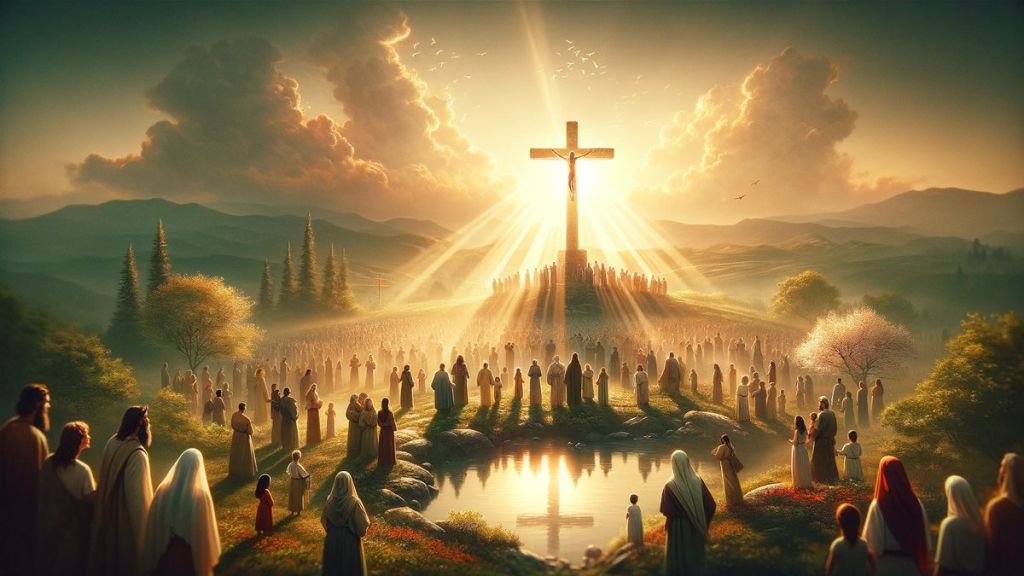
The world acknowledges that there is beauty in the meaning of Christmas, but they sense the gleam through a glass darkly. There are many in the world who seek a meaning to their existence, a meaning that offers security and a sense of belonging. To this, Emmanuel offers the meaning and essence of Christmas. It offers the hope that God is with us, not just above us, nor against us, nor outside us, completely unknowing and unconcerned. He is the Emmanuel, the God with us.

This is the miracle of Christmas. Not just that a child was born, but that God came to live among us. Emmanuel is the promise that the story of mankind is not left out in the cold, that hope has come into the world, and love has fleshed itself out. And in that truth, Christmas gets its greatest meaning.
|Share The Good News|


Leave a Reply